Blooming
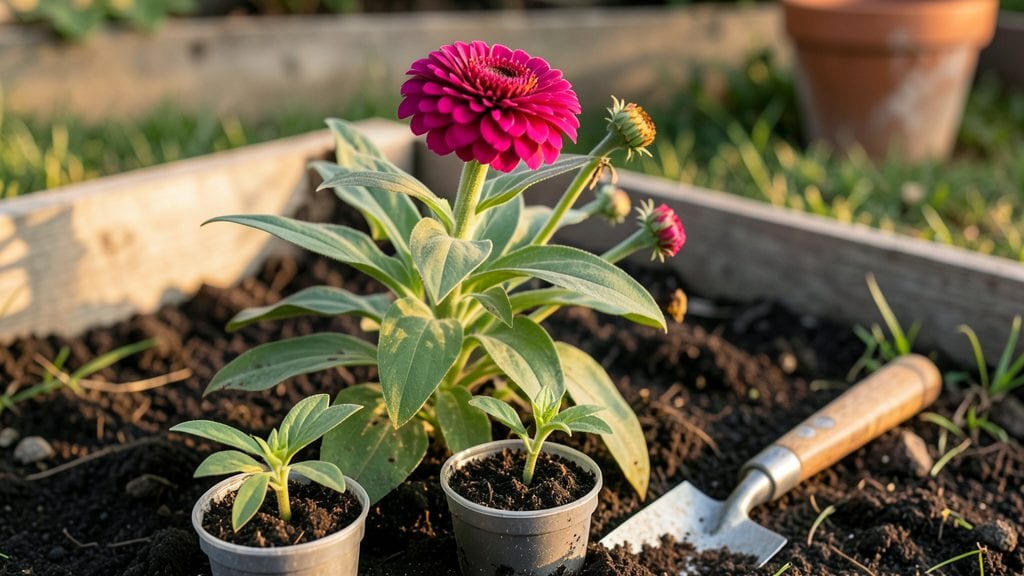
Succession planting zinnias means never running out of vibrant blooms all summer long. ✨ I learned this trick after my first garden season when my zinnias faded by July—now my beds stay colorful until frost.
The secret is simple: plant new seeds every 3-4 weeks instead of one big batch, and your zinnias will bloom continuously.
You’ll need a sunny spot with well-draining soil, zinnias seeds, and a basic watering routine. Most varieties work, but dwarf zinnias like ‘Thumbelina’ or ‘Crystal’ are perfect for small spaces.
Start your first batch when soil reaches 60°F, then repeat every few weeks until 6-8 weeks before your first frost.
The payoff is stunning: instead of a single burst of color, you’ll have fresh zinnias opening every 2-3 weeks. Bees and butterflies will visit nonstop, and you’ll cut flowers for bouquets all season. The key is keeping soil moist but not soggy—zinnias hate wet feet.
This method works in containers too, making it great for balconies or small yards. Even if you’ve never gardened before, zinnias are forgiving. Let’s get those seeds in the ground and turn your summer into a nonstop floral show!
📚 In This Guide
- What you need
- Instructions
- Tips and common mistakes
- Wrapping up and next steps
What you need
- ● Zinnia seeds – Choose a variety suited to your climate (e.g., Zinnia elegans for heat tolerance). Aim for 2–4 seeds per planting spot (thin to the strongest seedling later).
- ● Well-draining potting mix or garden soil – Amend with compost for nutrient-rich soil (aim for 2–3 inches of compost per planting area).
- ● Containers or garden beds – Containers should have drainage holes and be at least 6 inches deep. Garden beds need full sun (6+ hours/day).
- ● Watering can or hose with a gentle spray nozzle – Zinnias need consistent moisture, especially during germination.
- ● Plant markers or labels – Track planting dates (e.g., biweekly intervals for succession).
- ● Hand trowel or transplanting tool – For digging small holes (¼ inch deep for seeds, 1 inch deep for transplants).
- ○ Seedling trays (optional) – If starting indoors, use biodegradable pots or trays with cell sizes of 2–3 inches.
- ● Organic fertilizer (5-10-5 or balanced) – Lightly sprinkle at planting and again when flowers appear (follow label rates).
- ● Mulch (straw or shredded leaves) – Helps retain moisture and suppress weeds (1–2 inches thick).
- ● Pruning shears – Deadhead spent blooms to encourage continuous flowering.
- ○ Shade cloth (optional) – Use for seedlings if temperatures exceed 85°F.
Step-by-step instructions for succession planting zinnias
Extend your zinnia season effortlessly by planting in waves—here's how to keep blooms coming all summer.
🌱 Step 1: Choose Your Planting Schedule
Zinnias thrive when planted in 2-3 week intervals starting 4-6 weeks before your last frost date. For a 12-week bloom season, divide your seeds into three batches: first planting at 4 weeks before frost, second at 2 weeks before frost, and final at frost date. This staggered approach ensures continuous color as earlier batches fade.
Check your local frost dates and mark the starting point. I like to use a simple calendar reminder—set it for 3 weeks before the first planting date to prep all materials. Zinnias grow fast, so timing is everything for overlapping blooms.
💧 Step 2: Prepare the Planting Site
Select a spot with full sun (at least 6-8 hours daily) and well-draining soil. Zinnias hate soggy roots, so amend heavy clay with 2-3 inches of compost or the organic matter from your materials list. Loosen the top 6 inches of soil with a garden fork to improve root penetration.
If planting in containers, use 5-6 inch pots for each batch (you'll need 4 pots total for 4 plants). Fill with a mix of potting soil and perlite (1:1 ratio) to ensure drainage. Water the pots thoroughly 24 hours before planting to prevent transplant shock.
☀️ Step 3: Sow Seeds at the Right Depth
Plant seeds ¼ inch deep in rows 12-18 inches apart for full-size zinnias, or 6-8 inches apart for dwarf varieties. For containers, place 2-3 seeds per pot—zinnias germinate quickly, so you can thin later. Gently press the soil over seeds to ensure good contact but don't compact it.
Water lightly after planting to settle the soil, then maintain even moisture (not soggy) until germination. You'll see tiny green sprouts in 7-14 days—this is your signal to reduce watering slightly. Overwatering at this stage causes damping-off, which kills seedlings overnight.
✂️ Step 4: Thin and Maintain for Continuous Blooms
Once seedlings reach 2 inches tall, thin to 1 plant per 6-12 inches (depending on variety). Use scissors to snip unwanted plants at soil level—this prevents disturbing roots of remaining seedlings. Deadhead spent blooms weekly by pinching off flowers just above the next set of leaves to encourage more blooms.
Fertilize lightly every 4-6 weeks with a balanced organic fertilizer (10-10-10 ratio). Too much nitrogen makes zinnias leafy but flowerless. Watch for powdery mildew on humid days—spray leaves with water in the morning to prevent fungal issues.
⏰ Step 5: Repeat Plantings for Extended Season
After your first batch blooms, repeat the process with the next batch of seeds. By the time the first zinnias fade, the second planting will be in full bloom. For a 12-week season, your third planting should bloom just as the first finishes. Save seeds from the strongest plants for next year—zinnias self-seed easily.
Harvest flowers in the morning for longest vase life. Cut stems at a 45-degree angle just above a leaf node to encourage bushier growth. With this method, your garden will stay vibrant from early summer to frost.
Tips & tricks for perfect succession planting zinnias
A few simple tricks will help you master the art of staggered planting for vibrant zinnias all season long.
Timing Secret: The 2-3 week intervals between plantings are non-negotiable for continuous blooms. I like to use a garden journal to track each batch—mark your first planting date, then set reminders for 2 and 4 weeks later. This ensures you're always ready with fresh seeds and pots for the next round. The key is to have your third batch ready to plant just as the first starts fading, creating a perfect bloom overlap.
Soil Preparation Strategy: Don't overlook the importance of well-draining soil for zinnias. If you're working with heavy clay, mix in that 2-3 inches of compost before planting—it's worth the extra effort. For containers, that 1:1 ratio of potting soil to perlite makes all the difference in preventing root rot. I've learned the hard way that soggy roots can kill zinnias faster than any pest.
Thinning Technique: When those seedlings reach 2 inches tall, resist the urge to pull them by hand. Use clean scissors to snip at soil level—this prevents disturbing the roots of your remaining plants. I always thin to 1 plant per 6-12 inches (depending on variety) to give each zinnia room to thrive. The plants you remove can be transplanted to fill gaps in other flower beds if you're feeling generous.
Make-Ahead Strategy: You can prep your planting site up to 2 weeks in advance—amend the soil, mark your planting spots, and even fill your containers with the potting soil mix. Just remember to water those pots thoroughly 24 hours before planting to prevent transplant shock. This head start saves you time when planting day arrives and ensures your zinnias get off to the best possible start.
Pro Tips for Succession Planting Zinnias
- A few simple tricks will help you master the art of staggered planting for vibrant zinnias all season long.
- Timing Secret: The 2-3 week intervals between plantings are non-negotiable for continuous blooms.
- Soil Preparation Strategy: Don't overlook the importance of well-draining soil for zinnias.
Frequently asked questions
Got questions about keeping your zinnias blooming all season long? Here are some of the most common concerns—and their solutions—to help you master succession planting zinnias like a pro.
What’s the best time to start my first zinnia succession planting?
For a continuous display, begin sowing seeds every 2–3 weeks after your last frost date. In warmer climates, start in early spring, while cooler zones may wait until late spring. Aim for 6–8 weeks of growth before the first frost—this ensures mature plants before cold snaps arrive. Pro tip: Use a seedling heat mat if your season is short!
How many times can I succession plant zinnias in one season?
Zinnias thrive with 3–5 rounds of succession planting per season, depending on your climate. Stagger sowings every 2 weeks until 6–8 weeks before your first frost. For example, in Zone 7, you might plant in late April, mid-May, early June, and July. Avoid planting too late—zinnias need time to establish before cooler weather.
What should I do if my zinnias get pests or diseases between plantings?
Common issues like Japanese beetles, powdery mildew, or spider mites can disrupt blooms. Act fast: Handpick beetles, spray neem oil for mildew, and prune affected leaves. Rotate planting spots yearly to prevent soil-borne diseases. Pro tip: Interplant with marigolds to deter pests naturally!
Can I use succession planting for other flowers besides zinnias?
Try sunflowers, cosmos, or marigolds—they’re all great for staggered blooms. Just adjust timing: sunflowers need 60+ days, while cosmos germinate faster (10–14 days). The key is matching the plant’s days to maturity with your frost dates. Bonus: Mix heights and colors for a dynamic garden!
What’s the easiest way to keep track of my planting schedule?
Use a garden journal or digital calendar to log sowing dates, varieties, and expected bloom times. Color-code by planting round (e.g., red = first batch, blue = second) and set reminders for watering or pest checks. Pro tip: Snap photos of each batch—it’s a great way to track progress and troubleshoot!
Still stumped? Drop your zinnia questions in the comments—we’re happy to help!
Wrapping up and next steps
Succession planting zinnias is your secret weapon for a longer, more vibrant blooming season—without the hassle of endless replanting! By spacing out your sowing or transplanting, you’ll enjoy a steady parade of color from early summer well into fall, even in cooler climates. 🌸
Ready to put this into action? Start small with just one or two batches this year, and watch your garden transform. Once you see the magic of staggered blooms, you’ll never go back to planting all at once!
Next step: Grab your seeds, mark your calendar, and begin your first round—your future garden will thank you! 🌱