Flowers
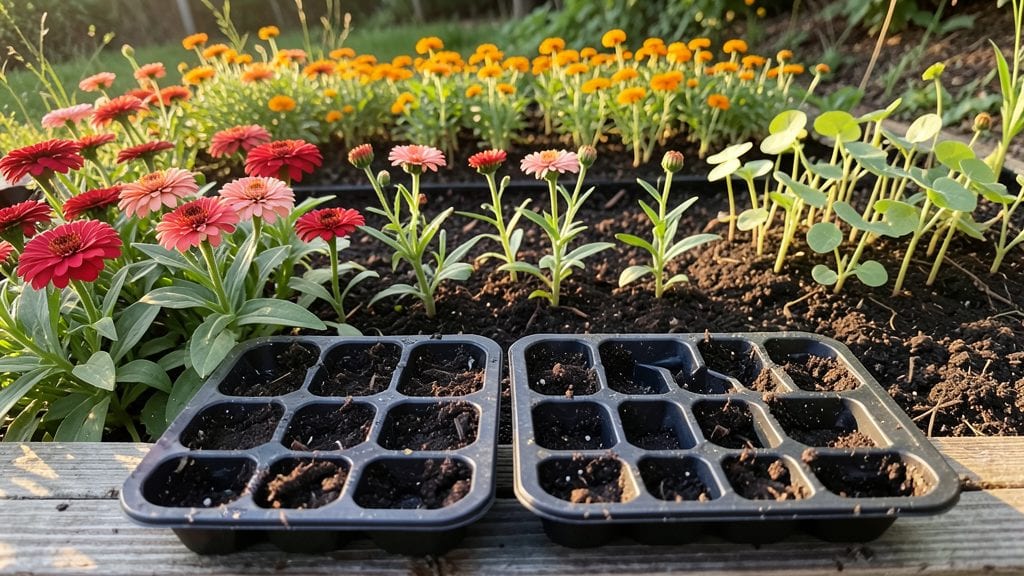
Succession planting flowers turns one-time blooms into a never-ending parade of color. 🌸 I learned this trick after my summer garden hit a dead zone in August—until I swapped out spent zinnias for cosmos and snapdragons.
The secret lies in matching bloom times, spacing plants strategically, and rotating varieties before they fade.
The beauty of this method is that it doesn’t require fancy tools or years of experience. You’ll need a simple planting schedule, complementary flower types (like early daisies followed by late-blooming asters), and a little extra space in your beds or containers.
Even small gardens can handle it—just stagger plantings every 3-4 weeks starting in early spring.
What you end up with is a garden that looks fresh from June through October, with no boring gaps. Imagine vibrant pinks fading into deep purples as one variety gives way to the next, all while attracting pollinators.
The key is planning ahead so each new planting takes over just as the last one starts to slow down.
This works for both in-ground beds and containers, though containers need slightly more frequent rotation. Whether you're a first-time gardener or a seasoned pro, succession planting flowers makes your garden feel alive all season long. Let’s get those bloom times aligned!
📚 In This Guide
- What you need
- Instructions
- Tips and common mistakes
- Wrapping up and next steps
What you need
- ● Flower seeds – Choose fast-growing annuals (e.g., marigolds, zinnias, cosmos) or biennials (e.g., sweet william, snapdragons). Aim for 2–3 varieties with staggered bloom times (early, mid, and late season).
- ● Seed-starting mix – A lightweight, sterile mix (e.g., Pro-Mix or FoxFarm Seedling Mix), 1–2 bags depending on volume.
- ● Garden soil – Well-draining, amended soil (add compost or aged manure for fertility). Test pH if needed (ideal: 6.0–7.0 for most flowers).
- ● Compost or organic fertilizer – Balanced 10-10-10 or slow-release granules (follow package rates).
- ● Mulch – Straw, shredded leaves, or wood chips (2–3 inches deep) to retain moisture and suppress weeds.
- ● Hand trowel or transplanting spade – For digging small holes (3–4 inches deep).
- ● Garden gloves – A pair to protect your hands from thorns or rough soil.
- ● Watering can or hose with nozzle – A gentle spray setting for seedlings.
- ● Plant labels or markers – Waterproof tags to track varieties and planting dates.
- ○ Row cover or shade cloth (optional) – Lightweight fabric to protect young plants from pests or frost.
- ● Pruners or scissors – For deadheading spent blooms (sharp, clean blades to avoid disease).
- ● Sunlight assessment – Map your garden’s full sun (6+ hrs), part sun (3–6 hrs), or shade ( areas.
- ● Planting schedule – Research your hardiness zone and last frost date (use Almanac’s tool).
- ● Succession timeline – Plan 3–4 planting waves (e.g., every 3–4 weeks for annuals).
- ● Water source nearby – Ensure easy access for consistent moisture (especially for seedlings).
Step-by-step instructions for succession planting flowers
Here’s how I keep my flower beds vibrant all season—no empty spaces, no wasted effort.
🌱 Step 1: Plan Your Flower Groups by Bloom Time
Start by grouping flowers based on when they bloom—early, mid, and late season. I like to map out a simple chart with 4-5 varieties per group so I can stagger plantings every 2-3 weeks. For example, plant snapdragons in early spring, then zinnias in late spring, and finish with cosmos in early summer. This ensures continuous color as one variety fades and another takes over.
Check seed packets for days to maturity—this tells you exactly when to plant the next group. For instance, if your first planting of marigolds takes 50 days to bloom, schedule the next batch 30 days later so they start flowering just as the first ones fade. I always mark these dates on my calendar so I don’t forget.
🌿 Step 2: Prepare the Soil Before Planting
Succession planting works best in well-draining, nutrient-rich soil. Before planting, loosen the soil to a depth of 12 inches using a garden fork or tiller. Mix in 2-3 inches of compost to feed the roots and improve texture. If your soil is heavy clay, blend in 1 part sand for every 2 parts soil to help water drain properly.
I test the soil pH with a simple kit—most flowers thrive in 6.0-7.0 range. If your soil is too acidic, add lime; if it’s alkaline, work in sulfur. Don’t skip this step—poor soil leads to weak plants that can’t handle the stress of back-to-back plantings.
⏰ Step 3: Plant in Staggered Rows or Blocks
Instead of planting everything at once, divide your flower bed into 4-5 sections and plant one group in each. Space plants according to their mature size—6-12 inches apart for most annuals. I like to plant fast growers like cosmos in the back and taller varieties like sunflowers toward the center to avoid shading smaller flowers.
Label each section with a small stake or flag so you remember which group goes where. This prevents confusion when it’s time to plant the next batch. For example, if Section 1 is pansies (early bloomers), Section 2 might be petunias (mid-season), and so on. Rotate your planting schedule so each section gets a fresh group every 2-3 weeks.
💧 Step 4: Water and Fertilize for Continuous Growth
After planting, water deeply to 1 inch below the soil surface—this encourages strong root growth. I use a soaker hose to keep moisture even without wetting the leaves, which helps prevent disease. Water every other day for the first week, then taper to 2-3 times per week once established, depending on rain.
Feed plants with a balanced, slow-release fertilizer (like 10-10-10) at planting, then again 6 weeks later. For organic options, use fish emulsion or compost tea every 4 weeks. Succession planting demands steady nutrients, so don’t skip this—weak plants won’t bloom reliably.
✂️ Step 5: Deadhead and Monitor for Gaps
As flowers fade, deadhead spent blooms immediately to encourage more flowers and extend the season. I do this every 3-4 days during peak bloom time. For example, if your zinnias start dropping petals, snip them off at the base to redirect energy into new buds.
Watch for empty spots between plantings—if a group finishes blooming too early, fill the gap with fast-growing fillers like alyssum or lobelia. These tiny flowers bloom quickly and bridge the gap until your next scheduled planting. Keep a notebook to track which varieties perform best in your climate so you can refine your schedule next year.
Tips & tricks for perfect succession planting
Here's what I've learned after years of keeping flower beds vibrant all season—these tricks save time and prevent common pitfalls.
Bloom Time Tracking: Create a simple chart with your flower groups and mark bloom dates on your calendar. I use color-coded stickers—green for early bloomers like pansies, yellow for mid-season zinnias, and red for late-season cosmos. This visual helps me see gaps and plan fillers like alyssum or lobelia when needed. Trust me, you'll avoid those awkward empty spots that ruin the garden's flow.
Soil Prep Shortcut: Don't have a soil test kit? Grab a handful of soil and mix it with water—if it smells strongly, it's too acidic. For a quick fix, sprinkle dolomitic lime over the area before planting. I also add a handful of coffee grounds to the compost mix—they're packed with nitrogen and help balance pH while feeding plants. This simple step makes all the difference for succession planting.
Planting Layout Strategy: When dividing your bed into 4-5 sections, make them slightly larger than needed. This gives you flexibility to add extra plants if a variety performs better than expected. I've found that leaving 2-3 inches extra space between sections prevents overcrowding as plants mature. This also makes it easier to rotate crops next season if you want to try different varieties.
Deadheading Discipline: Set a timer for every 3-4 days during peak bloom to remind yourself to deadhead. I keep a small pair of pruning shears in my gardening apron and snip spent blooms while walking through the garden. This small habit extends your blooming season by weeks—zinnias, for example, will keep producing flowers as long as you remove faded ones consistently.
Pro Tips for Succession Planting Flowers
- Here's what I've learned after years of keeping flower beds vibrant all season—these tricks save time and prevent common pitfalls.
- Bloom Time Tracking: Create a simple chart with your flower groups and mark bloom dates on your calendar.
- Soil Prep Shortcut: Don't have a soil test kit?
Frequently asked questions
about succession planting flowers—because even the greenest thumbs have questions! Here are answers to the most common ones to keep your garden blooming like clockwork.What’s the best time to start succession planting flowers?
Start by planting fast-growing annuals like zinnias or marigolds every 2–3 weeks from early spring until mid-summer. For perennials, focus on late winter or early spring to align with their natural growth cycles. Pro tip: Check seed packets for specific "days to maturity" to plan your timing perfectly!
How do I know when to replant flowers for continuous blooms?
Watch for spent blooms or leggy stems—these are your cues! For annuals, replant when the first batch starts fading (usually after 6–8 weeks). For perennials, deadhead faded flowers to encourage reblooming, but avoid over-pruning. Example: Snapdragons thrive with staggered plantings every 3 weeks for summer-long color!
Is succession planting flowers more expensive than buying established plants?
Not necessarily! Seeds are far cheaper than mature plants, and succession planting lets you grow a larger variety for the same budget. Start with heirloom seeds or bulk packs to save even more. Bonus: Save seeds from your best bloomers for next year!
What if my flowers don’t bloom as expected after replanting?
Check these fixes:
- Light: Ensure 6+ hours of sun daily (most flowers are sun-worshippers!).
- Water: Keep soil consistently moist (not soggy) during germination.
- Soil: Amend with compost if blooms are sparse—flowers crave nutrients!
- Pests: Inspect for aphids or slugs that may be snacking on your seedlings.
Can I succession plant flowers in containers or small spaces?
Use compact varieties like petunias or pansies in pots, and replant every 4–6 weeks. For small gardens, try interplanting (e.g., radishes + cosmos) to maximize space. Container hack: Rotate pots to even out sunlight exposure!
Wrapping up and next steps
Succession planting flowers isn’t just a gardening hack—it’s your ticket to a nonstop parade of color and life in your garden! By strategically timing plantings, you’ll banish those frustrating gaps between blooms and enjoy a lush, ever-changing landscape all season long.
Whether you’re a seasoned gardener or just dipping your toes into the dirt, this method is simple, rewarding, and totally doable with a little planning.
Ready to dive in? Start by auditing your garden’s current blooms, then grab your supplies and sketch out a planting schedule. Your future self—and your pollinators—will thank you! 🌸🌼