
Watering
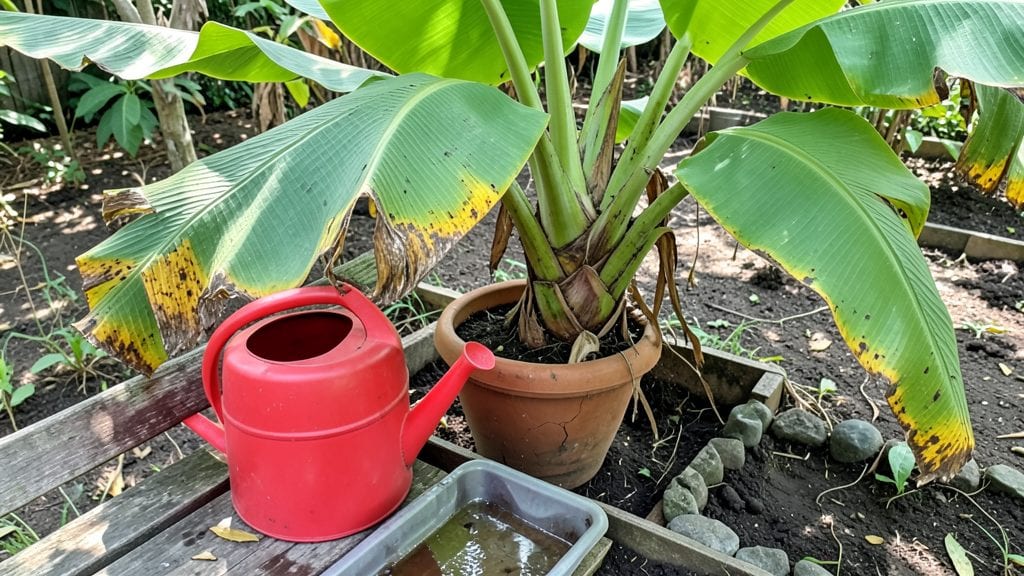
Your banana plant’s yellowing leaves are screaming for help—not from thirst, but from too much water. 🌱 I’ve nursed back overwatered banana plants with mushy stems and drooping fronds, and the fix starts with cutting back on the H₂O right now.
The good news? Banana plants are tougher than they look, and with the right adjustments, you’ll see fresh green growth within days.
First, check the soil—it should feel like a damp sponge, not a soggy rag. If it’s still wet after 2-3 inches down, that’s your problem.
Banana plants hate sitting in wet feet, which is why improving drainage is step one: add perlite or coarse sand to the mix if repotting, or elevate the pot to let excess water drain away.
And yes, I mean stop watering until the top 4 inches of soil dry out completely.
Within 3 days, you’ll notice the yellowing slow down as the roots get breathing room. Keep watering light but consistent—think of it like a gentle rain shower, not a monsoon. The goal is to mimic their tropical home where heavy downpours are followed by dry spells.
Your plant will reward you with vibrant new leaves and that signature banana-shaped fruit in no time.
Here’s the kicker: once you’ve got the watering routine down, banana plants are surprisingly low-maintenance. They’ll forgive occasional overwatering if you catch it early, but the key is consistency—no more guesswork, no more soggy soil. Trust me, your plant will thank you with lush, happy growth all season long.
Common Causes of Excessive Moisture
Banana plants may seem like they thrive in tropical humidity, but too much water can quickly turn their lush green leaves into sad, yellowing messes. Understanding the root causes of overwatering helps you adjust your care routine before damage sets in.
Here’s why your banana plant might be drowning in its own pot:
Banana plants need well-draining soil to prevent water from pooling around their roots. If your container lacks drainage holes or the soil is too dense (like heavy clay), excess water sits instead of draining away.
Over time, this creates anaerobic conditions—where roots suffocate without oxygen. Without oxygen, roots can’t absorb nutrients or expel toxins, leading to yellowing leaves and even root rot.
Why it matters: Banana roots are sensitive to waterlogged soil. Even just one day of poor drainage can trigger stress, and prolonged saturation kills roots entirely.
Many gardeners assume tropical plants need constant moisture, but banana plants (especially Musa spp.) are surprisingly drought-tolerant once established. Watering on a strict schedule—like every 2–3 days—without checking soil moisture leads to oversaturation. Even well-meaning owners can drown their plants by:
- Ignoring rainfall (if outdoors) and adding extra water.
- Using a spray bottle for misting instead of deep watering.
- Assuming larger pots need more water (they often hold moisture longer).
Science behind it: Banana plants evolved in regions with seasonal droughts. Their roots develop deep into the soil to access water during dry spells. Frequent shallow watering keeps the top layer soggy but leaves deeper roots thirsty—creating an imbalance.
A pot that’s too small restricts root growth and accelerates moisture buildup, while large containers (especially unglazed clay) can dry out unevenly. However, plastic pots trap humidity longer, creating a greenhouse effect that slows evaporation.
If your banana plant’s roots are crowded or the pot lacks airflow, excess water has nowhere to go.
Key signs:
- Water pooling on the soil surface after 30+ minutes.
- Roots growing in circles (root-bound) or poking out drainage holes.
- Leaves wilting after watering (a sign of root stress).
Pro tip: Terra cotta pots are ideal for banana plants—they breathe better than plastic and signal when it’s time to water (they get lighter as soil dries).
Humidity, temperature, and even wind affect how quickly soil dries. For example:
- High humidity (70%+): Slows evaporation, keeping soil damp longer. Banana plants in bathrooms or greenhouses may need less frequent watering.
- Low light: Plants photosynthesize less, reducing their need for water. Yellowing leaves in shady spots often signal overwatering, not underwatering.
- Cold drafts: Chilly air near roots (like from AC vents) can shock the plant, making it more susceptible to rot.
Actionable fix: Move your banana plant to a bright, indirect spot with moderate humidity (50–60%) and avoid placing it near temperature fluctuations.
Once you identify the cause, you can revive your banana plant in 3 days—but prevention starts with understanding why the problem began in the first place.
Revive Your Banana Plant Fast
Overwatering can turn your banana plant’s lush green leaves into sad, yellowing messes—but don’t panic! With the right steps, you can nurse it back to health in just 3 days. Below, we’ll break down cause-specific fixes and prevention tips to keep your plant thriving.
Cause: Excess moisture suffocates roots, leading to rot and nutrient loss. Fix:
- Pause watering for 48 hours to let the soil dry out.
- If the pot feels heavy or water pools at the bottom, empty excess water and let it drain completely.
- Pro tip: 💡 Use your finger to check soil moisture—if the top 2 inches are damp, wait another day.
Cause: Poor drainage traps water, promoting root rot. Fix:
- Repot if needed: If the current pot lacks drainage holes, transfer your banana plant to a container with holes (terracotta works best).
- Add perlite or orchid bark (10-20%) to the soil mix to boost aeration.
- Raise the pot on a saucer or stand to prevent soggy bottoms.
Cause: Bananas hate "wet feet"—they prefer slightly dry conditions. Fix: - Water deeply but infrequently: Wait until the top 3-4 inches of soil are dry before watering again. - Morning watering is key—avoid evening sessions to prevent fungal growth. - Check humidity: Bananas love 60-80% humidity.
Use a pebble tray or humidifier if your air is dry.
Cause: Tap water minerals or fertilizers build up, burning roots. Fix:
- Rinse the soil with distilled or rainwater to flush out salts.
- Soak the pot in a bucket of water for 10 minutes, then drain thoroughly.
- Switch to filtered water if your tap water is hard.
Cause: Yellow leaves drain energy—remove only the worst offenders. Fix:
- Snip yellow/brown leaves at the base with sterilized scissors (don’t cut healthy green leaves!).
- Leave some yellow if it’s less than 25% of the leaf—it’s still photosynthesizing!
- Compost the clippings (unless moldy—then toss them).
✅ Soil test: Use a moisture meter to avoid guesswork. ✅ Pot size matters: Too big = water traps.
Choose a pot 10-20% larger than the root ball. ✅ Mulch lightly: A 1-inch layer of straw helps retain just enough moisture without drowning roots. ✅ Monitor weather: Increase watering slightly in extreme heat, but never overdo it.
🎯 Quick Recap:
- Stop watering for 2 days.
- Repot if needed and improve drainage.
- Water only when dry (top 3-4 inches).
- Flush salts with clean water.
- Trim dead leaves but keep the rest!
With these fixes, your banana plant should bounce back in 3 days—and you’ll be rewarded with bold new growth in weeks! 🌟
Frequently asked questions
How do I tell if my banana plant is overwatered vs. underwatered?
Check the soil first—if it’s soggy or smells like rot, you’ve overwatered. Yellowing leaves with mushy stems confirm it. Underwatered plants have crispy, brown edges and dry soil 2+ inches down. Tap the pot gently: if it feels light, it needs water.
Can I save a banana plant with black, rotten roots?
Yes, but act fast! Trim away all black/mushy roots with clean scissors, then repot in fresh, well-draining soil with perlite. Skip watering for 5-7 days to let roots recover. If >50% of roots are dead, recovery takes longer—but new roots will grow if the stem is still firm.
Why does my banana plant keep getting yellow leaves even after I stop watering?
Yellow leaves often linger because the plant is still flushing out toxins from damaged roots. If new leaves stay green and old ones keep falling, you’re on the right track. Check for hidden issues: fungus gnats (tiny black flies) or nutrient burn from fertilizers—both worsen overwatering effects.
What’s the best soil mix for banana plants to prevent overwatering?
Use a chunky, airy blend: 60% potting soil + 20% perlite + 10% orchid bark + 10% coconut coir. This combo drains fast but retains just enough moisture. Avoid garden soil—it compacts and holds too much water. Terra cotta pots help too by wicking moisture away.
How often should I water a banana plant in winter vs. summer?
In summer, water when the top 3 inches of soil dry out (every 5-7 days). In winter, cut back to every 10-14 days—growth slows, so roots need less. Always check soil moisture: stick your finger in! Humidifiers help in dry winter air to mimic tropical conditions.