
Plants
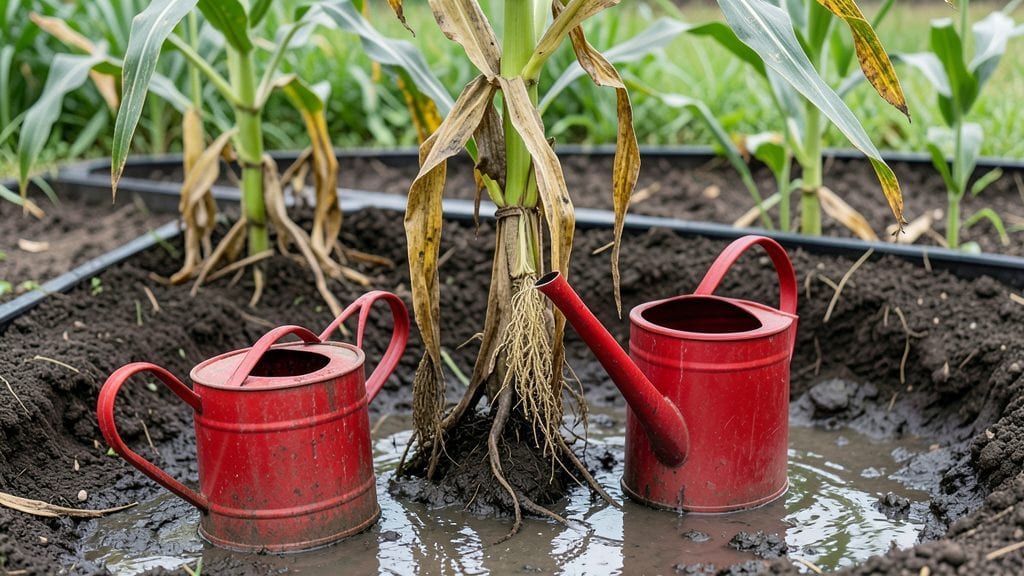
Your corn plant’s drooping leaves aren’t just thirsty—they’re drowning. 🌱 Overwatered corn shows up with yellowing lower leaves, mushy stems, and roots that smell like rot, not fresh soil.
I’ve nursed back plants that looked dead to life using one simple trick that fixes the root system without replacing the whole pot.
The problem starts when soil stays soggy for days, cutting off oxygen to roots. Corn needs well-draining soil that dries out 1-2 inches between waterings—think of it like a sponge that wrings out excess, not a swamp.
The fix? A mix of perlite and coconut coir added to heavy soil, plus a drainage layer of pebbles at the pot’s bottom.
Within a week of adjusting watering and improving airflow, you’ll see new growth pushing through. The leaves perk up, stems firm up, and those stubborn yellow patches fade as the plant redirects energy to recovery. No more guessing—just check the soil with your finger before watering again.
This works for houseplants too, not just corn. The same principles apply to any plant struggling with soggy soil. Once you master this, your whole collection will thank you with stronger roots and happier leaves.
Root Issues Behind Water Woes
Understanding why your corn plant ends up drowning in excess moisture starts with its roots—and how they react to too much water. Corn plants (like many tropical varieties) thrive in well-draining soil, but when water lingers, it triggers a cascade of problems.
Let’s break down the science behind the soggy soil struggle.
🌊 The #1 reason water pools around roots.
Corn plants hate compacted or clay-heavy soil because it acts like a sponge, absorbing water but refusing to release it. Without proper drainage, roots suffocate in a waterlogged environment, cutting off oxygen (a critical nutrient for growth).
Over time, this leads to: - Root rot (fungal/bacterial infections thrive in wet conditions). - Stunted growth (roots can’t absorb nutrients efficiently). - Yellowing leaves (a classic sign of oxygen deprivation).
Actionable fix: Amend soil with perlite, vermiculite, or coconut coir to improve aeration. Test drainage by pouring water into a pot—if it takes longer than 10 minutes to drain, your mix is too dense.
💦 When "just a little more" becomes too much.
Corn plants (especially tropical varieties) need consistent moisture but not soggy conditions.
Common watering mistakes include: - Ignoring soil moisture: Stick your finger 1–2 inches deep—if it’s damp, wait. - Watering on a schedule: Plants drink based on heat, humidity, and pot size, not a calendar. - Using the wrong pot: Glazed or plastic containers trap moisture longer than terracotta or fabric pots, which breathe better.
Pro tip: 🌡️ The finger test is foolproof—if the top inch is dry, water; if not, hold off. Overwatering is often a habit, not a one-time mistake.
🌬️ When the air itself is the problem.
High humidity (common in greenhouses or bathrooms) slows evaporation, keeping soil wet longer. Combine that with stagnant air (no fan or ventilation), and roots stay drenched.
Signs of this issue: - Moldy soil (white/fuzzy growth on surface). - Slow wilting (leaves droop but don’t crisp—unlike underwatering). - Musty smells (a red flag for fungal growth).
Fix it fast: 💡 Increase airflow with a small fan or open windows. If humidity is extreme, reduce watering frequency by 20–30%.
🏺 Size and material matter more than you think.
A pot that’s too small fills with water quickly, while one that’s too large stays wet for days.
Materials also play a role: - Plastic pots retain moisture longer (great for desert plants, terrible for corn). - Self-watering pots can over-saturate if not monitored. - No drainage holes? Water pools at the bottom, drowning roots.
Quick check: ⏰ Weigh your pot—if it feels heavy after watering, it’s holding too much. Upgrade to a terracotta pot with holes or a hanging basket for better drainage.
🧪 When "feeding" backfires.
Too much fertilizer (especially high in salts) disrupts soil structure, making it harder for water to drain. Over time, salts crust the soil surface, preventing evaporation.
Symptoms: - White residue on soil or pot rims. - Brown leaf tips (nutrient burn). - Slow recovery after watering (roots can’t absorb anything).
Solution: 🌱 Flush the soil every 2–3 months with room-temperature water (let it drain completely). Use a balanced, diluted fertilizer (half-strength) to avoid overfeeding.
❄️🔥 When roots get confused by extremes.
Cold drafts (from AC vents or winter windows) slow root activity, making plants less efficient at processing water. Meanwhile, sudden heat (like a sunny windowsill) increases evaporation—leading to overcompensation watering. The result? Roots stay soggy while the plant struggles to adapt.
Adjustments:
- Keep corn plants in stable temps (65–80°F).
- Avoid placing them near heat/AC vents.
- Move pots away from direct sunlight if leaves wilt quickly (a sign of stress).
Most overwatering issues boil down to one or more of these factors: poor drainage, inconsistent watering, humidity, pot problems, or environmental stress. The good news? Fixing one often solves the rest. Start with drainage and watering habits, then tweak the rest based on your plant’s response.
💡 Remember: A happy corn plant has moist (not wet) soil and roots that breathe. If in doubt, wait—roots can recover faster than you think!
Revive Your Corn Plant Now
Overwatering can feel like a death sentence for your corn plant, but don’t panic—with the right steps, you can nurse it back to health. The key is acting fast to correct drainage issues, prevent root rot, and restore balance.
Below, we’ve broken down the most common causes of overwatering and the practical fixes to turn things around, plus tips to keep your plant thriving long-term.
Cause: Overwatering suffocates roots, starving leaves of oxygen and nutrients. Solution:
- Stop Watering Immediately 🚰
- Let the top 2–3 inches of soil dry out completely before watering again. Stick your finger in the soil—if it’s damp past 1 inch, wait.
- Repot in Fresh, Well-Draining Soil 🏺 - Gently remove the plant from its pot and inspect the roots.
If they’re mushy or black (signs of rot), trim away the damaged sections with sterilized scissors. - Use a light, airy potting mix blended with perlite or orchid bark (30% amendment) to improve drainage. Avoid dense, water-retentive soils.
- Boost Airflow 💨
- Move your corn plant to a spot with indirect light and good circulation (e.g., near a window with a fan on low). Stagnant air worsens moisture buildup.
Prevention Tip: 💡 Water only when the topsoil feels dry to the touch—corn plants prefer slightly dry conditions over soggy soil.
Cause: Chronically soggy soil creates anaerobic conditions, leading to fungal/bacterial root rot. Solution:
- Disinfect the Pot 🧼
- Scrub the old pot with a 10% bleach solution (1 part bleach to 9 parts water) to kill pathogens. Rinse thoroughly.
- Apply a Fungicide (If Needed) 🛡️
- For severe rot, spray the roots with a copper-based fungicide (like Copper Soap) or hydrogen peroxide (3% solution, diluted 1:1 with water). Let it sit for 10 minutes before replanting.
- Adjust Your Watering Routine 📅
- Water deeply but infrequently—aim for once every 7–10 days (adjust based on humidity/temperature). Use the "soak-and-dry" method: Water until it drains from the bottom, then empty the saucer.
Pro Tip: ✨ Add a layer of horticultural charcoal to the soil mix—it absorbs excess moisture and prevents rot-causing bacteria.
Cause: Overwatering weakens the plant’s ability to absorb nutrients, leading to slow growth or collapse. Solution:
- Fertilize Lightly (But Right) 🌱
- Wait 2–3 weeks after repotting before fertilizing. Use a balanced, water-soluble fertilizer (like 10-10-10) at half-strength to avoid shocking the roots.
- Check for Pests 🐜
- Inspect leaves and stems for spider mites or fungus gnats (common after overwatering). Wipe leaves with neem oil or use sticky traps for gnats.
- Adjust Light Exposure ☀️
- Corn plants need bright, indirect light (e.g., east or north-facing windows). If leaves are pale, supplement with a grow light 12 inches away for 6–8 hours/day.
Prevention Tip: 🌡️ Monitor your home’s humidity—corn plants thrive in 40–60% humidity. Use a hygrometer and add a pebble tray or humidifier if air is too dry.
If your corn plant is completely limp, blackened, or falling apart, try this last-resort rescue:
- Prune Damaged Foliage ⏰
- Snip off yellow, mushy, or black leaves with clean shears to redirect energy to healthy growth.
- Root in Water (Temporarily) 💦
- Place the cleaned roots in a jar of room-temperature water (change daily) for 3–5 days to purge rot. Keep the jar in bright, indirect light.
- Replant Carefully 🌿
- Once roots show new green growth, repot in sterile, fast-draining soil and keep it in high humidity (like a plastic tent) for a week.
Warning: ⚠️ If roots are completely black and smelly, the plant may not recover—start fresh with a cutting if possible.
Final Thought: Overwatering is reversible, but speed and soil health are critical. By cutting back on water, improving drainage, and giving your plant the right conditions, you’ll see new growth within 2–4 weeks. Stay patient—your corn plant will bounce back! 🌱💚
Frequently asked questions
How do I tell if my corn plant is overwatered vs. underwatered?
Check the soil first—if it’s damp 1-2 inches deep, it’s likely overwatered. Look for yellowing lower leaves, mushy stems, or roots that smell rotten. Underwatered plants have crispy brown edges and dry soil pulling away from the pot. The key difference? Overwatered plants wilt despite wet soil, while underwatered ones wilt because of dryness.
Can I save a corn plant with root rot from overwatering?
Yes, but act fast! Trim away black/mushy roots with sterilized scissors, repot in fresh well-draining soil (mix in perlite), and stop watering for 5-7 days. For severe cases, soak roots in hydrogen peroxide (3% diluted 1:1) for 10 minutes before replanting. Recovery takes 2-4 weeks if you catch it early.
Why does my corn plant droop after watering?
Drooping after watering usually means root stress from overwatering or poor drainage. Let the soil dry completely between waterings, and ensure your pot has drainage holes. If the drooping persists, check for root rot—healthy roots should be firm and white, not mushy and brown. A quick fix is to move it to bright, indirect light and increase airflow with a small fan.
What’s the best soil mix to prevent overwatering?
Use a light, airy blend of 50% potting soil, 30% perlite or orchid bark, and 20% coconut coir. This mix improves drainage while retaining enough moisture. Avoid heavy garden soil or pure peat moss—both trap water and suffocate roots. Test your mix by pouring water in: it should drain within 10-15 minutes.
How often should I water my corn plant?
Water when the top 1-2 inches of soil feel dry—typically every 7-10 days, but adjust for your environment. In low humidity, water less; in high humidity, water more sparingly. Always water until it drains from the bottom, then empty the saucer to prevent soggy roots. Stick your finger in the soil before watering—it’s the most reliable method!