Pruning
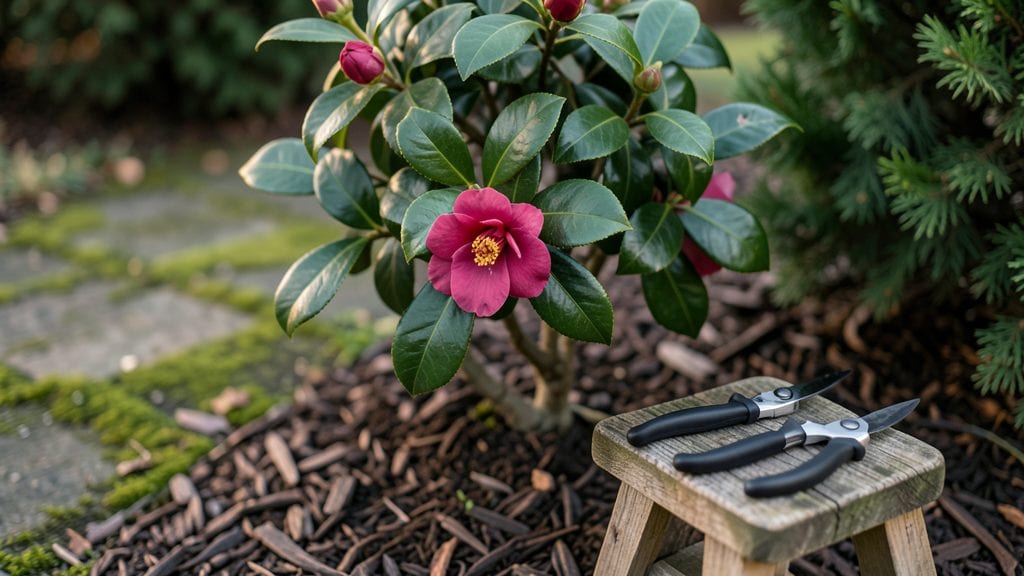
Pruning Japonica plants isn't just about keeping them tidy—it's the secret to year-round blooms and a plant that fights off disease like a champ. 🌿 I learned this the hard way when my first camellia turned into a tangled mess after a single winter, but now I prune with purpose every season.
The right cuts at the right time mean fewer dead branches, more flowers, and a bush that stays lush even when others struggle.
You don’t need fancy tools—just sharp bypass pruners and a clear plan. The key is timing: prune right after flowering to shape while the plant is still energized, and do a light cleanup in late winter to remove dead wood.
I’ve found that cutting back too hard in summer stresses the plant, so I focus on removing only the necessary growth. Even a few strategic snips can transform a leggy camellia into a dense, vibrant beauty.
What you’ll end up with is a Japonica that blooms reliably from fall through spring, with glossy leaves that resist pests and diseases. The best part? You’ll spend less time battling brown spots and more time admiring the bold, glossy foliage and clusters of flowers.
This method works for all Camellia japonica varieties, whether you’ve got a mature bush or a young plant just starting to fill out.
The real magic happens when you adjust for your climate—cooler zones can prune a little later, while hotter areas benefit from summer shade protection. Once you get the rhythm, it takes about 20 minutes per plant, and the results are worth every minute.
Ready to give your camellia the care it deserves?
What Triggers Unwanted Japonica Growth
Your Japonica plant may look like it’s growing wild—unruly, leggy, or overcrowded—because of a few key factors tied to its biology and environment. Understanding these triggers helps you prune with purpose, not panic. Let’s break down the real reasons behind those chaotic growth patterns.
Japonica plants (especially varieties like Hydrangea macrophylla) are bred for lush, abundant foliage and blooms. Their genetic makeup encourages rapid, bushy growth—a trait that’s great for fullness but can spiral into chaos if left unchecked. Here’s why:
- High-energy photosynthesis: Japonica plants thrive in partial shade to full sun, absorbing plenty of light to fuel vigorous stem and leaf production. Without pruning, they redirect energy from blooms to structural support, leading to dense, tangled canopies.
- Basal shoots: These plants often sprout new stems from the base (called "suckers") as a survival mechanism. If the main plant is stressed or overcrowded, these shoots compete aggressively for nutrients, creating a thicket.
- Flowering cycle demands: Japonica blooms on old wood (last year’s growth), so the plant prioritizes extending stems to maximize next year’s flowers. Without pruning, this results in long, leggy branches with fewer blooms.
Actionable fix: Prune in early spring (before buds swell) to remove 1/3 of the oldest stems and encourage new, balanced growth. This prevents the plant from overcompensating with wild shoots.
Pruning at the wrong time—or using the wrong method—can accidentally trigger more problems than it solves. Japonica plants are sensitive to timing and cuts, and mistakes often backfire:
- Late-season pruning: Cutting back after mid-summer removes next year’s flower buds (which form on old wood), leading to bare stems and a "haircut" effect. The plant responds by sending out weak, water-sprout-like growth to fill gaps.
- Over-pruning: Removing more than 1/3 of the plant in one session shocks the system. The Japonica reacts by producing fast, thin growth to recover quickly—often at the expense of bloom quality.
- Top-heavy cuts: Pruning only the top leaves (e.g., "heading back" too aggressively) leaves lower branches starved for light. The plant stretches upward, creating long, weak stems that flop or break.
Actionable fix:
- ✂️ Prune in late winter/early spring (just as buds swell) to shape the plant before new growth starts.
- 🌿 Use the "thirds rule": Never remove more than 1/3 of the plant in one session. Spread cuts over 2–3 years if needed.
- 🔄 Thin out, don’t just trim: Remove entire stems at the base (not just the top) to open the canopy and reduce overcrowding.
Japonica plants are resilient, but they’re not invincible. When their environment shifts—whether due to weather, soil, or light—they react with chaotic growth as a survival tactic. Common culprits include:
| Stressor | How It Triggers Growth Issues | What to Watch For |
|---|---|---|
| Too much shade | Plants stretch toward light, producing long, weak stems with sparse leaves (a condition called etiolation). | Leggy growth, pale leaves, fewer blooms. |
| Poor drainage | Root stress forces the plant to send up extra shoots to compensate for nutrient loss. Overwatering also leads to root rot, which triggers basal suckers. | Mushy stems, yellowing leaves, dense basal growth. |
| Extreme heat/drought | Under stress, Japonica may bolt (send up rapid, flower-heavy growth) or produce small, deformed leaves to conserve water. | Wilting, crispy edges, sudden flower spikes. |
| Nutrient imbalance | Too much nitrogen = leafy, leggy growth with few blooms. Too little phosphorus = stunted, weak stems. | All-leaf, no-flower plants or slow, sparse growth. |
Actionable fix:
- 🌞 Ensure 4–6 hours of morning sun (afternoon shade helps in hot climates).
- 💧 Water deeply but infrequently: Let the top 2 inches of soil dry out between waterings.
- 🌱 Test soil pH (ideal: 5.5–6.2) and amend with organic compost or balanced fertilizer (10-10-10).
When Japonica plants are under siege from pests or pathogens, their growth becomes defensive and erratic. Common invaders include:
- Scale insects or aphids: These sap-suckers weaken the plant, causing it to produce new shoots to replace damaged ones. Infested branches may also curl or distort.
- Powdery mildew: Fungal infections thrive in humid conditions, coating leaves and blocking photosynthesis. The plant responds by sending up small, malformed leaves to compensate.
- Root-knot nematodes: These microscopic worms damage roots, reducing nutrient uptake. The above-ground reaction? Excessive basal shoots and stunted growth.
Actionable fix:
- 🦟 Inspect leaves regularly for sticky residue (aphids), white powder (mildew), or tiny bumps (scale).
- 🚿 Spray with neem oil or insecticidal soap for pests. For mildew, use baking soda spray (1 tsp baking soda + 1 quart water + drop of soap).
- 🌱 Improve airflow by pruning dense areas and mulching to prevent fungal spread.
Pro tip: 💡 Keep a pruning journal
Revitalize Your Japonica Plant
Pruning your Hibiscus syriacus (commonly called Japonica) can feel overwhelming, but with the right approach, you can transform overgrown, leggy, or diseased bushes into vibrant, healthy plants bursting with color.
Below are targeted solutions for common pruning problems, complete with step-by-step fixes and prevention tips to keep your Japonica thriving year-round.
Cause: Neglecting regular pruning leads to dense, tangled branches that block sunlight and air circulation.
Fix:
- 🔪 Trim Back in Stages
- Start by removing dead or crossing branches first—these compete for nutrients and weaken the plant.
- Use clean, sharp pruners (or loppers for thicker stems) to cut just above a leaf node or outward-facing bud.
- For severe overgrowth, reduce branches by ⅓ in early spring (March–April) to encourage bushier growth.
- 🌱 Shape for Balance
- Step back and visualize the plant’s natural shape. Aim for an open, vase-like form to maximize airflow.
- Prune selectively—avoid shearing (which encourages weak growth). Instead, focus on thinning out interior branches to let light penetrate.
Prevention Tips: ✨ Prune annually in late winter/early spring (just before new growth starts). ✨ Monitor growth in summer—trim lightly to maintain shape and remove spent blooms. ✨ Fertilize lightly in spring to support controlled, healthy growth.
Cause: Insufficient light or over-pruning in previous years leads to long, woody stems with few leaves or flowers.
Fix:
- 🌱 Rejuvenate with Hard Pruning
- If the plant is severely leggy, cut back all stems by ⅔ in late winter. This may seem drastic, but Japonica plants are resilient and will regrow vigorously.
- For moderate legginess, trim back half the height of the longest stems, focusing on the oldest wood first.
- 🌞 Boost Light Exposure
- Move the plant to a sunnier location (Japonica thrives in full sun, 6+ hours/day).
- If potted, rotate the container occasionally to ensure even sunlight exposure.
Prevention Tips: 💡 Prune for density—always leave 3–5 strong buds on each stem to encourage branching. 💡 Avoid heavy summer pruning—this can stunt new growth before winter.
Cause: Poor airflow, wet foliage, or stress from improper pruning invites powdery mildew, black spot, or aphids.
Fix:
- 🧼 Clean Up and Prune Strategically
- Remove infected leaves/branches immediately—sterilize your pruners with rubbing alcohol between cuts.
- Thin the canopy to improve airflow—aim for gaps between branches to dry foliage faster.
- Avoid overhead watering; water at the base in the morning.
- 🌿 Treat and Prevent Fungal Spread
- Neem oil spray (1 tsp per quart of water) or baking soda solution (1 tbsp baking soda + 1 tsp dish soap per gallon) can help combat mildew.
- Apply copper fungicide as a preventive measure in humid climates.
Prevention Tips: 🌡️ Space plants 3–5 feet apart to reduce humidity buildup. 🎯 Mulch around the base (but not touching the stem) to keep soil moist without wetting leaves. 🔥 Inspect regularly—catch pests/diseases early with weekly checks on the undersides of leaves.
Cause: Late pruning or insufficient protection in cold climates leads to frozen stems or weak regrowth.
Fix:
- 🌟 Time Pruning Correctly
- Wait until after the last frost (typically late April–May in most zones) to prune. Early pruning exposes tender new growth to cold.
- If winter damage is severe, prune back to healthy, brown (not black) wood in early spring.
- 🛡️ Protect in Harsh Winters
- Mulch heavily (4–6 inches) around the base with straw or shredded leaves.
- Wrap young plants with burlap or a frost cloth in extreme cold snaps.
Prevention Tips: ✨ Choose cold-hardy cultivars like ‘Diana’ or ‘Blue Chiffon’ for zones 5–9. ✨ Avoid heavy pruning in fall—this stimulates new growth that can’t survive winter.
Final Pro Tip: 💡 Keep a pruning journal! Note when and how you prune each year—this helps track what works best for your Japonica’s growth habits. With consistent care, your plant will reward you with bold blooms and lush foliage for years to come!
Frequently asked questions about Japonica plant care
When is the best time to prune my Japonica plant?
For Camellia japonica, the ideal time is late winter to early spring (just before buds swell) to shape while the plant is dormant. Avoid pruning after mid-summer—this removes next year's flower buds. Light cleanup pruning can happen after flowering to maintain shape.
How much should I cut back during pruning?
Never remove more than 1/3 of the plant in one session. For shaping, focus on thinning out crowded branches by cutting back to outward-facing buds. If rejuvenating a leggy plant, you can cut back up to 2/3 of the height in late winter, but spread this over 2-3 years for best results.
What tools do I need for proper pruning?
Use sharp bypass pruners for small branches and loppers for thicker stems. Keep tools clean and sterilized with rubbing alcohol to prevent disease spread. A hand saw may be needed for very thick branches. Always make clean cuts at a 45-degree angle just above a leaf node.
Why does my Japonica have so many basal shoots?
Basal shoots (suckers) appear when the plant is stressed from overcrowding, poor drainage, or root damage. To control them, remove them at the base in early spring. Improve soil drainage and space plants 3-5 feet apart to reduce competition. These shoots compete for nutrients, weakening your main plant.
Can I prune my Japonica in fall?
Fall pruning is generally not recommended as it stimulates tender new growth that can't survive winter. If you must prune in fall, do only light cleanup work—remove dead or diseased branches only. Save major shaping for late winter when the plant is dormant.