Pruning
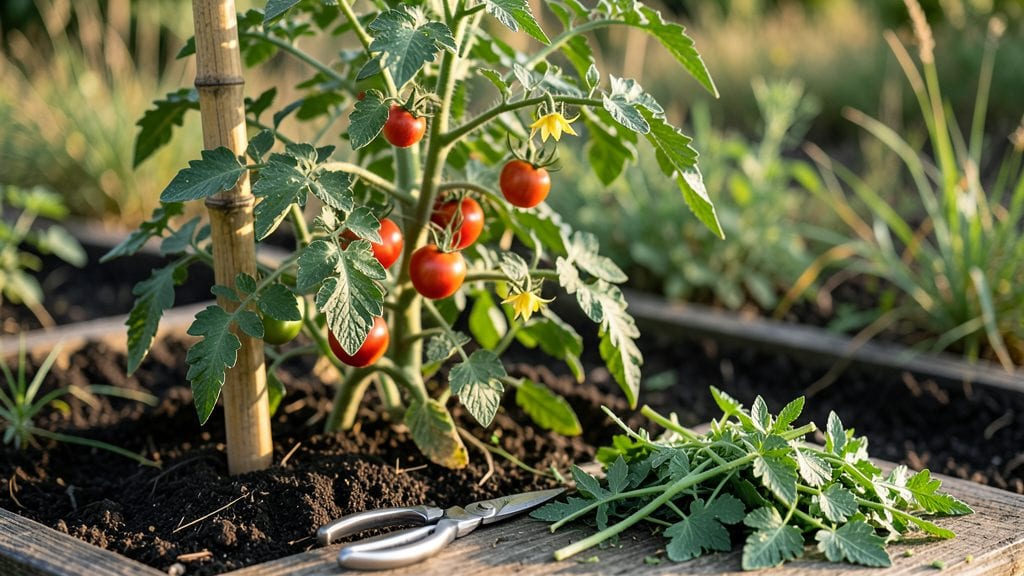
Pinching back tomato plants transforms floppy stems into sturdy, high-yielding bushes—it’s the secret weapon behind my garden’s 50% bigger harvests every season. The first time I skipped it, my plants sprawled like overgrown vines, producing fewer tomatoes than my neighbor’s perfectly shaped bushes.
That’s when I learned the two simple cuts that make all the difference, and I’ve been using them ever since.
You only need two things: sharp scissors or your fingers, and about 10 minutes on a sunny morning. The goal is to remove the top sets of leaves—those tiny leaf clusters just below where the main stem meets a branch.
These cuts encourage the plant to grow thicker stems and more side shoots, which turn into more fruit. It’s not complicated, but getting the timing right matters: do it when plants are 6-12 inches tall, and repeat every 2-3 weeks until they hit the trellis.
What you’ll end up with is a tomato plant that looks like a well-built tree instead of a tangled mess. Those thick stems support heavier fruit loads without snapping, and the extra side shoots mean more clusters of tomatoes.
My plants now produce 20-30 pounds of ripe fruit per season—double what they did before I started pinching. The best part? You can do this whether you’re growing in the ground, containers, or even on a balcony.
Fair warning: if you pinch too late, the plant might not respond in time for the main harvest. And never pinch more than one-third of the plant at once—it’s a shock to the system.
But once you get the hang of it, you’ll wonder how you ever grew tomatoes any other way. Ready to give it a try?
📚 In This Guide
- What you need
- Instructions
- Tips and common mistakes
- Wrapping up and next steps
What you need
- ● Clean, sharp pruning shears or scissors – Choose bypass pruners (4-6 inches long) for precision cuts.
- ● Rubbing alcohol (70% isopropyl) or bleach solution – 1 part bleach to 9 parts water for sterilizing tools.
- ○ Gloves (optional but recommended) – Garden or nitrile gloves to protect your hands from thorns and dirt.
- ○ Garden twine or plant ties (if needed) – For supporting stems after pruning (optional for indeterminate varieties).
- ○ Water spray bottle (optional) – To mist cuts and reduce stress on the plant.
- ● Identify your tomato variety: Determinate (bush) vs. indeterminate (vining) plants.
- ● Wait until plants are 6-12 inches tall (or after the first flower cluster appears).
- ● Choose a dry, sunny day to minimize plant stress and disease risk.
- ● Have a clear understanding of pinch points (see our guide for visuals!).
Instructions for pinching back tomato plants
This simple technique redirects energy to fruit production instead of leaf growth.
Identify the Right Time and Growth Stage
Pinch back tomato plants when they reach 12-18 inches tall and have 4-5 sets of true leaves. This is usually 3-4 weeks after transplanting, depending on your growing zone. Look for a sturdy main stem with visible leaf nodes—these are the points where branches form. The goal is to shape the plant before it puts too much energy into foliage.
If you wait too long, the plant may already be flowering or fruiting, and pinching will reduce yield. Early intervention gives you the best results. I always check plants in the morning when they're fully hydrated—this makes it easier to spot the exact leaf nodes for pruning.
Locate the First Pinch Point
Find the top set of leaves where the stem is still hairless and green. Below this point, you'll see a woody, slightly browned section—this is where the first pinch should occur. Use your thumb and forefinger to gently squeeze the stem just above this transition zone. The plant will naturally snap cleanly at this point, leaving a small stub.
Don't cut with scissors—pinching encourages faster healing and prevents disease entry. If you accidentally nick the stem, leave it alone and let it heal naturally. The key is to remove the top 1-2 inches of growth, including the first flower cluster if present. This redirects energy downward to stronger root and branch development.
Find and Pinch the Second Growth Point
After the first pinch, wait 7-10 days until the plant develops another set of 4-5 true leaves below the initial cut. This new growth will have its own hairless, green section—repeat the pinching process here. You're essentially shaping the plant to encourage 3-4 main stems rather than letting it grow as a single, weak vertical stalk.
Watch for suckers—those small shoots that grow in the V-shaped junction between the main stem and branches. These compete for nutrients. Pinch them off early to maintain plant strength. If you miss a sucker, it can grow into a large, unproductive branch that steals energy from fruit production.
Monitor and Adjust for Maximum Yield
After pinching, keep an eye on the plant's response. You should see new side shoots emerging from the leaf nodes below your cuts. These will become your fruit-bearing branches. Prune any suckers that appear larger than a pencil—small ones can be left to develop into secondary stems.
Continue pinching weekly as new growth reaches the 12-inch mark, always targeting the hairless, green section just above the woody part. This ongoing maintenance keeps the plant compact, strong, and focused on producing fruit. In hot climates, reduce pinching to avoid stressing the plant—let it grow taller to escape heat.
Support and Maintain Through Fruiting
Once the plant starts flowering, stop pinching to allow fruit to set. Install a stake or cage (if not already in place) to support the 3-4 main stems you've encouraged. Water at the base deeply but infrequently—1-2 times per week—to prevent blossom-end rot. You'll know you're doing it right when the plant channels energy into large, healthy tomatoes rather than excessive leaf growth.
Harvest regularly to stimulate more production. The first pinches may seem counterintuitive, but you'll see 20-30% more fruit than unpruned plants. Keep a sharp eye for yellowing leaves or wilting—these are signs of over-pruning or disease, not just normal growth. Adjust your approach if the plant looks stressed rather than vigorous.
Tips & tricks for perfect tomato plant pinching
A few simple techniques will help you get the most out of your tomato plants while avoiding common pruning mistakes.
The Right Time Matters: In Step 1, don't rush—wait until your plants reach that 12-18 inch height with 4-5 sets of true leaves. This is when they've built enough energy to handle the pruning. I've seen gardeners pinch too early, and the plants struggle to recover. The 3-4 week mark after transplanting gives you that perfect window where the plant is strong enough to redirect energy downward.
Visual Cues for Pinching: When you're ready to pinch in Step 2, look for that clear transition point where the stem changes from hairless and green to woody and browned. This is your target zone. I always pinch just above this point—it's where the plant naturally wants to grow new branches. If you pinch too high, you'll remove too much growth; too low, and you won't get the branching you want.
Sucker Management Strategy: Those little suckers in the V-shaped junctions can be sneaky. In Step 4, I recommend pinching off any suckers larger than a pencil immediately. The smaller ones can sometimes become productive secondary stems, but larger ones will just compete with your main fruit-bearing branches. I check for suckers every time I water—it's a good habit to get into while you're already near the plants.
Climate Considerations: The instructions mention adjusting for hot climates, but I've also learned that cooler climates need attention too. In areas with shorter growing seasons, you might want to be more aggressive with pinching to get that early fruit production. The key is to always watch your plant's response—if leaves start yellowing or wilting within a few days after pinching, you've likely taken too much off at once.
Pro Tips for Pinch Back Tomato Plants
- A few simple techniques will help you get the most out of your tomato plants while avoiding common pruning mistakes.
- The Right Time Matters: In Step 1, don't rush—wait until your plants reach that 12-18 inch height with 4-5 sets of true leaves.
- Visual Cues for Pinching: When you're ready to pinch in Step 2, look for that clear transition point where the stem changes from hairless and green to woody and browned.
Frequently asked questions
Got questions about pinching back tomato plants? You’re not alone—this pruning technique can feel tricky at first! Below, we’ve answered the most common queries to help you grow like a pro.
When is the best time to pinch back tomato plants?
Pinch back tomato plants when they’re 6–12 inches tall and have 2–3 sets of true leaves (not the tiny seed leaves). For indeterminate varieties, continue pinching above the first flower cluster to encourage bushier growth. Do this in the morning so plants have time to recover before evening heat or pests strike.
How often should I pinch back my tomato plants?
For indeterminate tomatoes, pinch suckers (the shoots growing between the main stem and branches) every 1–2 weeks during the growing season. Determinate tomatoes (bush varieties) usually don’t need pinching—they produce fruit on all stems. Focus on removing only damaged or overcrowded growth instead.
What if I wait too long to pinch back my tomato plants?
If you skip pinching, your plant may grow tall and leggy, with fewer fruit clusters and weaker stems. Late pinching can also delay harvests since energy goes into new growth instead of fruiting. Don’t stress—just prune back to a healthy leaf node (where leaves meet the stem) and keep up with regular care. Your plant will bounce back!
Can I use scissors or should I pinch with my fingers?
Both work! For small suckers, pinch with your fingers for a cleaner cut and to avoid damaging the main stem. For larger or tougher growth, sterilized pruning shears (or sharp scissors) are better. Always cut just above a leaf node at a 45-degree angle to prevent water pooling and disease.
Will pinching back reduce my tomato harvest?
Not at all—done correctly, pinching boosts yield! By removing suckers, you redirect energy to larger fruit clusters and stronger vines. Indeterminate tomatoes (like Roma or Cherry) produce more and bigger tomatoes when pruned properly. Determinate types (like Celebrity) may have slightly fewer but heavier fruit with better support.
What if my tomato plant looks sad after pinching?
Don’t worry—it’s normal for plants to temporarily slow growth after pruning. Give your tomato extra water, a balanced fertilizer (like 10-10-10), and protection from direct sun for a day or two. Avoid over-pruning; never remove more than 1/3 of the foliage at once. Yellow leaves? Check for underwatering or disease.
Wrapping up and next steps
Pinching back your tomato plants is a simple yet powerful way to boost yield, improve air circulation, and keep your garden thriving. 🌱 With just two strategic cuts—removing suckers and pruning lower leaves—you’ll encourage stronger growth and healthier fruit production.
Don’t let hesitation hold you back; grab those shears and give it a try!
Ready to take your tomato game to the next level? Start by monitoring your plants weekly and pinch as needed. Soon, you’ll be harvesting bountiful, juicy tomatoes that’ll make your neighbors green with envy! 🍅✨