Shrubs
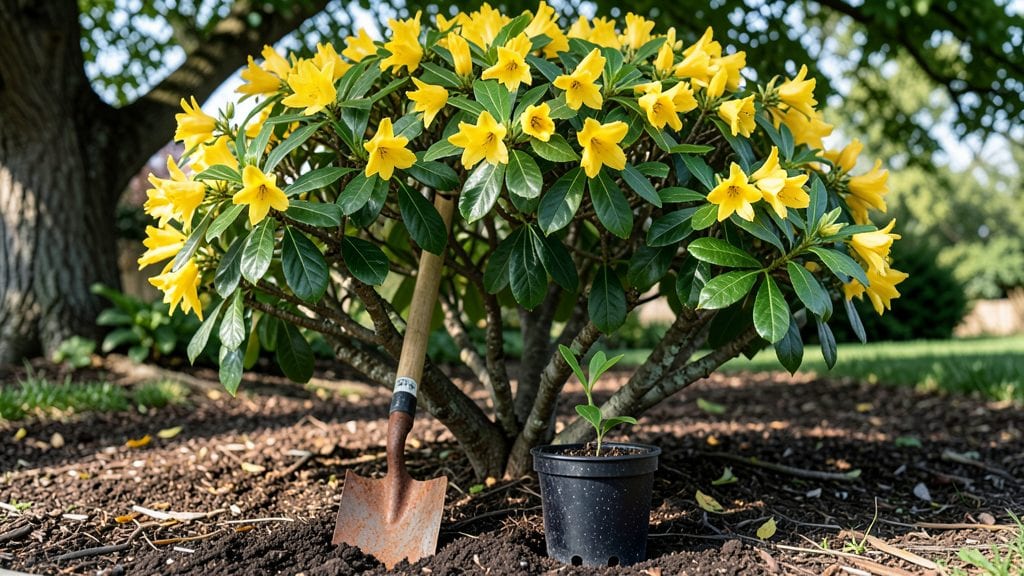
Planting forsythia shrubs at the right distance makes all the difference—too close, and they’ll fight for sunlight; too far, and your yard looks sparse. I learned this the hard way when my first two forsythias grew into tangled messes because I ignored spacing.
The key is matching their mature width (usually 6–10 feet) to your design goals, whether you’re planting them as standalone stars or in a tidy hedge.
For single shrubs, give them 8–10 feet of space to spread naturally without crowding. If you’re creating a hedge, space them 5–6 feet apart—they’ll fill in beautifully over time, but not so tightly that air can’t circulate.
Forsythias thrive in full sun, so spacing ensures every branch gets its share of light, which means more vibrant yellow blooms in early spring. Just avoid heavy clay soil, which can stunt their growth.
With the right spacing, you’ll see those bright yellow flowers popping up like clockwork every year, and the shrubs will stay healthy with minimal pruning. The payoff?
A yard that looks intentional, not accidental. Once established, forsythias are low-maintenance, but getting the spacing right from the start saves you headaches down the road.
Pro tip: If your yard has limited space, choose dwarf varieties like ‘Northern Gold’—they top out at 4–5 feet wide, so you can plant them 4–5 feet apart without sacrificing blooms. Just remember, forsythias grow fast, so plan ahead or you’ll be pruning back overgrown branches in a few years.
📚 In This Guide
- What you need
- Instructions
- Tips and common mistakes
- Wrapping up and next steps
What you need
- ● Forsythia shrubs: Choose healthy, bare-root or container-grown plants (1-3 years old). Quantity depends on your garden size—plan for 3-6 feet apart for standard varieties or 4-8 feet apart for dwarf types.
- ● Shovel or trowel: A garden shovel (for digging holes) and a hand trowel (for delicate planting).
- ● Measuring tape or spacing marker: Essential for maintaining forsythia planting distance (e.g., wooden stakes or spray paint for ground markers).
- ● Well-draining soil: Amend heavy clay or sandy soil with compost or peat moss (5-10 lbs per hole) to improve fertility and drainage.
- ● Mulch: Organic mulch (2-3 inches of shredded bark or wood chips) to retain moisture and suppress weeds.
- ● Watering can or hose: With a gentle spray nozzle for post-planting hydration.
- ● Slow-release fertilizer: A balanced 10-10-10 or rose-specific fertilizer (1 tbsp per plant) to boost early growth.
- ● Plant supports: Stakes or cages (if planting near windy areas).
- ● Pruning shears: For shaping after planting (sterilized with rubbing alcohol).
- ● Garden gloves: To protect your hands from thorns (some forsythia varieties have mild prickles!).
- ● Soil pH test kit: Forsythia prefers slightly acidic to neutral soil (pH 6.0-7.0)—adjust with lime or sulfur if needed.
Instructions for planting forsythia shrubs with perfect spacing
Here’s how to position forsythia for vibrant blooms and long-term health—no guesswork involved.
Determine Planting Location Based on Mature Size
Forsythia grows aggressively, so measure your space carefully. Single-stem varieties like ‘Lynwood Gold’ reach 10-15 feet tall and wide, while multi-stemmed types like ‘Spring Glory’ spread 8-12 feet wide. Mark the center of each planting spot with a stake to visualize the mature shrub’s footprint.
Check the site’s sunlight exposure—forsythia thrives in full sun (6+ hours daily) but tolerates partial shade. If planting near a wall or fence, leave 3 feet of clearance behind to prevent root competition and allow air circulation. This prevents fungal diseases that thrive in stagnant, shaded conditions.
Space Plants According to Variety and Garden Layout
For a hedge or screen, space single-stem forsythia 8-10 feet apart to allow branches to fill gaps naturally. Multi-stemmed varieties can be planted 6-8 feet apart since their layered stems create density faster. Dig a hole twice as wide as the root ball but no deeper—forsythia roots spread horizontally, not vertically.
In a mixed border, pair forsythia with understory plants like hostas or ferns to fill the early years before it matures. Avoid planting near shallow-rooted perennials, which may struggle as forsythia’s aggressive roots expand. If grouping multiple shrubs, stagger them in a 3-4 foot grid for a natural, layered look.
Plant and Stake for Stability
Place the shrub so the top of the root ball sits 1-2 inches above ground level—this prevents stem rot from sitting water. Spread roots gently outward and backfill with native soil, tamping lightly to eliminate air pockets. Water deeply to settle the soil and encourage root contact.
Stake only if the shrub leans or in windy areas. Use two 6-foot stakes driven 6 inches from the stem at a 45-degree angle, securing with flexible ties. Avoid tight binding, which can girdle the stem as it grows. Mulch with 2-3 inches of organic mulch (like shredded bark) in a 3-foot radius, keeping it 6 inches away from the stem to prevent moisture buildup.
Prune Strategically in the First Year
Skip heavy pruning the first year—let forsythia establish its root system. In early spring, remove only dead or crossing branches to maintain an open center. If the shrub grows too leggy, cut back 1-2 feet from the base of the longest stems to encourage bushier growth.
Forsythia blooms on old wood, so prune immediately after flowering (late spring) to shape the plant. Never prune in fall or winter, as you’ll remove next year’s flower buds. Thin out 20-30% of the oldest stems every 2-3 years to rejuvenate the shrub and improve airflow.
Monitor Growth and Adjust Spacing Over Time
Check spacing annually—forsythia’s canopy expands 1-2 feet per year. If branches from neighboring shrubs begin to touch, thin out one side of each plant to maintain separation. This prevents disease spread and ensures each shrub gets adequate sunlight.
Watch for yellowing leaves or stunted growth, which signals root competition. If needed, dig up and transplant one shrub to a new location at least 10 feet away. Forsythia recovers well from transplanting if done in early spring, but avoid moving established plants after mid-summer.
Tips & tricks for perfect forsythia planting spacing
These insights will help you avoid common mistakes and create a thriving forsythia display that lasts for decades.
Visualize Mature Size: Before planting, sketch your garden layout to scale, marking each forsythia’s mature footprint. Single-stem varieties like ‘Lynwood Gold’ need a full 15-foot diameter, while multi-stemmed types like ‘Spring Glory’ require at least 12 feet. I always use colored stakes to mark these boundaries—it prevents the "oops, my shrubs are touching" scenario after five years of growth. The key is planning for the plant’s adult size, not its current dimensions.
Sunlight Strategy: Forsythia thrives with full sun exposure (6+ hours daily), but its aggressive growth can create shade competition. When planting near walls or fences, maintain that 3-foot clearance behind the shrub—not just at planting time, but throughout its lifecycle. I’ve seen cases where homeowners planted too close, only to find their forsythia shading out other plants within three years. The solution? Plant understory companions like hostas or ferns in the initial years before the forsythia fully matures.
Root Ball Placement: The 1-2 inch elevation above ground level for the root ball isn’t just about drainage—it’s about preventing stem rot. I learned this the hard way after losing two young forsythias to fungal infections. Use a small mound of soil in the planting hole to achieve this elevation, then water deeply to settle everything. For larger containers, consider using a saucer with drainage holes to catch excess water while maintaining that critical elevation.
Pruning Timing: The late spring pruning window (immediately after flowering) is non-negotiable for forsythia. I’ve seen gardeners prune in fall or winter and wonder why their shrubs didn’t bloom the following spring. The secret is understanding that forsythia blooms on old wood—those flower buds formed last year. By pruning at the right time, you’re actually encouraging next year’s blooms while maintaining the plant’s natural shape. Mark your calendar for late May or early June after the yellow flowers fade.
Pro Tips for Forsythia Planting Distance
- These insights will help you avoid common mistakes and create a thriving forsythia display that lasts for decades.
- Visualize Mature Size: Before planting, sketch your garden layout to scale, marking each forsythia’s mature footprint.
- Sunlight Strategy: Forsythia thrives with full sun exposure (6+ hours daily), but its aggressive growth can create shade competition.
Frequently asked questions
Got questions about spacing your forsythia shrubs for the best growth and blooms? Here are some of the most common ones—and their answers—to help you plant with confidence!
What’s the ideal spacing for forsythia shrubs?
The general rule is 4 to 6 feet apart for standard forsythia bushes. If you’re planting a hedge, reduce spacing to 3 to 4 feet to encourage a denser, more uniform look. Dwarf varieties can be planted 2 to 3 feet apart.
How does spacing affect sunlight exposure?
Forsythia thrives in full sun (6+ hours daily), so proper spacing ensures each plant gets enough light. Crowding can lead to shady spots and fewer blooms. Space them 6+ feet apart in tight areas to prevent competition.
When is the best time to plant forsythia for optimal spacing?
Plant in early spring or fall when the soil is workable but not frozen. This gives roots time to establish before extreme weather. Avoid planting in summer heat, as it stresses young shrubs.
Can I plant forsythia too close together?
Yes! Overcrowding leads to poor air circulation, increasing disease risk (like powdery mildew) and stunted growth. If you’ve already planted too close, prune back branches or transplant one shrub to the correct distance.
What if my yard is small? Are there compact forsythia alternatives?
Try ‘Dwarf Forsythia’ (Forsythia × intermedia ‘Spectabilis’), which stays under 3 feet tall. Another option is ‘Spring Glory’, a semi-dwarf variety perfect for tight spaces with 2-foot spacing.
Wrapping up and next steps
Planting forsythia with the right spacing ensures vibrant blooms, healthy growth, and a stunning landscape. 🌸 Aim for 3 to 6 feet apart, adjusting for sunlight, variety, and long-term vision—whether you want a hedge or a scattered display.
With proper care, your forsythia will reward you with cheerful yellow flowers year after year!
Ready to transform your garden? Grab your tools, mark your spots, and get planting—your future springtime masterpiece is just a few shovels away! 🌱