Diseases
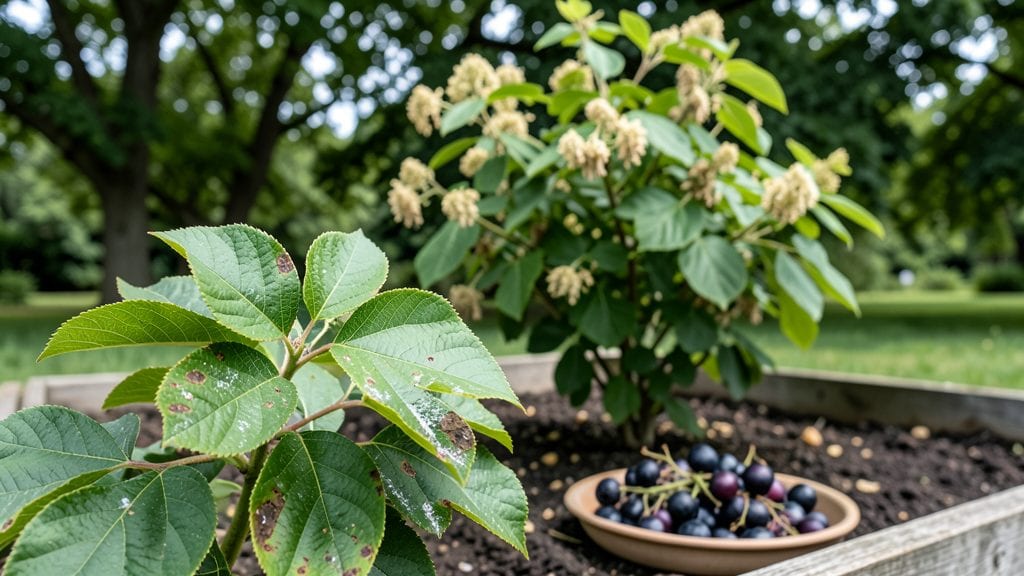
Identifying elderberry plant diseases early saves your bushes from total collapse. 🌿 I’ve watched powdery mildew turn lush foliage into skeletal white ghosts—then learned how to stop it before it spreads.
The key is catching symptoms fast: white dust on leaves, dark spots, or oozing stems mean trouble, but they’re also fixable with the right moves.
Most fungal threats respond to a combo of pruning, copper sprays, and better airflow. I cut out infected branches in dry weather, then spray a mix of baking soda and neem oil to smother spores.
For bacterial blight, I’ve had to remove whole canes—painful, but better than losing the plant. Prevention starts with spacing bushes properly and watering at the base, not overhead.
📚 In This Guide
- What you need
- Instructions
- Tips and common mistakes
- Wrapping up and next steps
What you need
- ● Diagnostic Tools: Hand lens or magnifying glass (10x magnification)
- ● pH testing kit (for soil/water)
- ○ Moisture meter (optional but helpful)
- ● Cleaning & Sanitation: Rubbing alcohol (70% isopropyl, 16 oz bottle)
- ● Bleach (unscented, 1 gallon) for tool sterilization
- ● Disposable gloves (nitrile, 10-pair pack)
- ● Pruning Supplies: Bypass pruners (sharp, stainless steel, 2-pack)
- ● Loppers (for thicker branches, 1 pair)
- ● Pruning saw (for large stems, 1)
- ● Treatment Solutions: Neem oil (organic, 16 oz spray bottle)
- ● Copper fungicide (liquid or spray, 16 oz)
- ● Baking soda (for homemade fungicide, 1 lb box)
- ● Hydrogen peroxide (3%, 16 oz for cleaning wounds)
- ● Spray bottle (16 oz, for targeted treatments)
- ● Garden hose with adjustable nozzle (for rinsing plants)
- ● Plant disease identification app (e.g., PlantNet or PictureThis)
- ● Compost or mulch (for soil health, 2-3 cubic feet)
- ● Row covers (floating fabric, 4x8 ft sheet for mildew prevention)
Step-by-step guide to managing elderberry plant diseases
Elderberries are tough, but fungal threats can still strike. Here’s how to spot, stop, and prevent the most common issues before they spread.
🌿 Step 1: Identify Common Elderberry Diseases
Start by learning the signs of powdery mildew (white, powdery patches on leaves), leaf spot (brown or black spots with yellow halos), and canker (sunken, discolored areas on stems). I check plants every 7-10 days during wet seasons—early detection is everything. Powdery mildew loves humidity, while leaf spot thrives in damp, crowded foliage.
Run your fingers over leaves to feel for rough textures (a sure sign of powdery mildew). Look for yellowing leaves or stunted growth—these are red flags. If you see black, tar-like spots, that’s likely sooty mold, which hitches a ride on aphids. Write down what you see to track progression.
💧 Step 2: Prune and Improve Airflow
Thin out branches to remove at least 20% of dense growth, focusing on crossing stems and overlapping leaves. I use sterilized pruners (dipped in rubbing alcohol) to avoid spreading spores. Prune in early morning when humidity is lowest—this gives foliage time to dry before nightfall.
Space plants 6-8 feet apart to prevent humidity buildup. Mulch with 2-3 inches of organic material (like wood chips) to keep soil moist but not soggy. Avoid watering overhead—use drip irrigation instead. Wet leaves for too long? That’s an open invitation for fungal spores.
☀️ Step 3: Apply Organic Fungicides Early
Mix 1 tablespoon baking soda + 1 teaspoon horticultural oil + 1 gallon water in a spray bottle. Test on a small leaf first—some elderberries are sensitive. Spray both sides of leaves until glistening, focusing on undersides where spores hide. Repeat every 7-10 days or after rain.
For stubborn powdery mildew, try a neem oil solution (1 tablespoon neem oil + 1 teaspoon mild soap per gallon of water). Apply in early evening to avoid burning leaves in direct sun. Always spray until runoff—fungicides need to stick to work. Rotate treatments to prevent resistance.
✂️ Step 4: Clean Up Debris and Prevent Spread
Rake up all fallen leaves and fruit by late fall—burn or compost them separately (don’t add to garden beds). I collect debris in a heavy-duty trash bag and seal it tightly. Fungal spores can survive winter, so don’t skip this step. Sterilize pruners again after cleanup.
Disinfect tools with 1 part bleach to 9 parts water, then rinse thoroughly. Store pruners in a dry, shaded spot between uses. If you notice blackened cankers on stems, prune those branches 6 inches below the affected area and destroy them immediately.
⏰ Step 5: Monitor and Adjust for Next Season
Keep a plant health journal—note which diseases appear, when, and after what conditions. I track rainfall, humidity, and pruning dates to spot patterns. Elderberries are resilient, but prevention is easier than cure. Start fungicide sprays 2 weeks before blooming to protect flowers.
In late winter, apply a 2-inch layer of compost around the base to boost plant vigor. Healthy elderberries fight off diseases better. If you replant, choose disease-resistant varieties like ‘York’ or ‘Nova’—they’re bred to handle fungal pressure. Rotate planting locations every 3-4 years to break disease cycles.
Tips & tricks for managing elderberry plant diseases
Here's what nobody tells you about keeping elderberries healthy—these tricks save me from fungal headaches every season.
Early Detection is Everything: I learned this the hard way after losing two bushes to powdery mildew. When checking every 7-10 days during wet seasons, don't just look—touch! Run your fingers over leaves to feel for the rough texture of powdery mildew. The sooner you spot those white patches or yellow halos around leaf spots, the easier they are to treat. I keep a small notebook by my plants to track when symptoms appear—this helps me spot patterns over time.
Pruning Strategy for Airflow: The 20% reduction in dense growth isn't just about aesthetics—it's about creating a microclimate where air can circulate. Focus on crossing stems first, as these create perfect humidity traps. I prune in early morning because the dew hasn't fully evaporated yet, which helps me see where branches overlap. Pro tip: Sterilize your pruners between cuts with rubbing alcohol to prevent spreading spores from diseased to healthy branches.
Fungicide Application Secrets: When mixing your baking soda solution (1 tbsp baking soda + 1 tsp horticultural oil per gallon), add a drop of dish soap—it helps the mixture stick better to leaves. For stubborn powdery mildew, I switch to neem oil in the evening because it can cause leaf burn in direct sunlight. The key is thorough coverage: Always spray until you see runoff, especially on leaf undersides where spores love to hide. I set a timer for 30 seconds per side to ensure even coverage.
Winter Cleanup Non-Negotiables: Don't just rake up fallen leaves—bag them in heavy-duty trash bags and seal them tightly. Fungal spores can survive winter, and compost piles are perfect breeding grounds. I mark my calendar for late fall cleanup because that's when many diseases go dormant but haven't fully died. For cankers, prune 6 inches below the affected area and destroy the branches immediately—don't compost them!
Pro Tips for Elderberry Plant Diseases
- Here's what nobody tells you about keeping elderberries healthy—these tricks save me from fungal headaches every season.
- Early Detection is Everything: I learned this the hard way after losing two bushes to powdery mildew.
- Pruning Strategy for Airflow: The 20% reduction in dense growth isn't just about aesthetics—it's about creating a microclimate where air can circulate.
Frequently asked questions
Got questions about elderberry plant diseases? You’re not alone!
Here are some of the most common concerns—plus quick, actionable answers to keep your bushes thriving.
What are the most common diseases affecting elderberry plants?
The top culprits are powdery mildew (white, powdery patches), leaf spot (brown/yellow spots), and anthracnose (dark, sunken lesions). Verticillium wilt (yellowing leaves, wilting) and root rot (mushy stems, foul smell) also strike, especially in wet conditions. Early diagnosis is key—check leaves and stems regularly!
When is the best time to treat elderberry diseases?
Act as soon as symptoms appear—don’t wait for full-blown outbreaks! For fungal issues like powdery mildew, treat in early spring (preventative copper fungicide) or late summer (after harvest). Prune infected branches in dormant season (winter) to remove overwintering spores. Pro tip: Morning applications let fungicides dry before evening moisture sets in.
Are there natural or organic treatments for elderberry diseases?
Try these DIY-friendly fixes:
- Baking soda spray: Mix 1 tbsp baking soda + 1 tsp oil + 1 tsp soap in 1 gallon water. Spray every 7–10 days for powdery mildew.
- Neem oil: Apply weekly (1% solution) for leaf spot/anthracnose. Shake well before use!
- Compost tea: Boosts plant immunity—brew 2–3 weeks before symptoms appear.
- Pruning + mulching: Remove debris and mulch with straw or wood chips to improve airflow.
For severe cases, copper fungicides (like Bordeaux mixture) are the gold standard.
Can elderberry plants recover from disease, or should I remove them?
It depends! Mild cases (early powdery mildew, leaf spot) often recover with treatment + proper care. But if you see wilted stems, oozing cankers, or widespread rot, dig and destroy the plant to prevent spread. Replace with resistant varieties like ‘York’ or ‘Nova’, which tolerate humidity better.
Why do my elderberries keep getting diseases year after year?
Repeat offenders usually stem from poor airflow, overwatering, or old plant debris. Fix it with:
- Thinning bushes (aim for 3–4 ft spacing).
- Watering at the base (avoid wetting leaves).
- Cleanup in fall: Rake and remove all fallen leaves/branches.
- Rotate fungicides to prevent resistance.
If soil is consistently soggy, raise beds or improve drainage with sand/compost.
Wrapping up and next steps
Protecting your elderberry plants from diseases doesn’t have to feel overwhelming—with the right knowledge and proactive care, you can keep them thriving! 🌿 From recognizing early signs of fungal infections to applying organic treatments and maintaining strong plant health, every step you take makes a difference. Start by inspecting your plants regularly and act at the first sign of trouble to prevent small issues from becoming major setbacks.
Ready to take action? Grab your gardening tools, review the prevention tips, and give your elderberries the care they deserve! Your future harvests will thank you. 🍇