Pests and Diseases
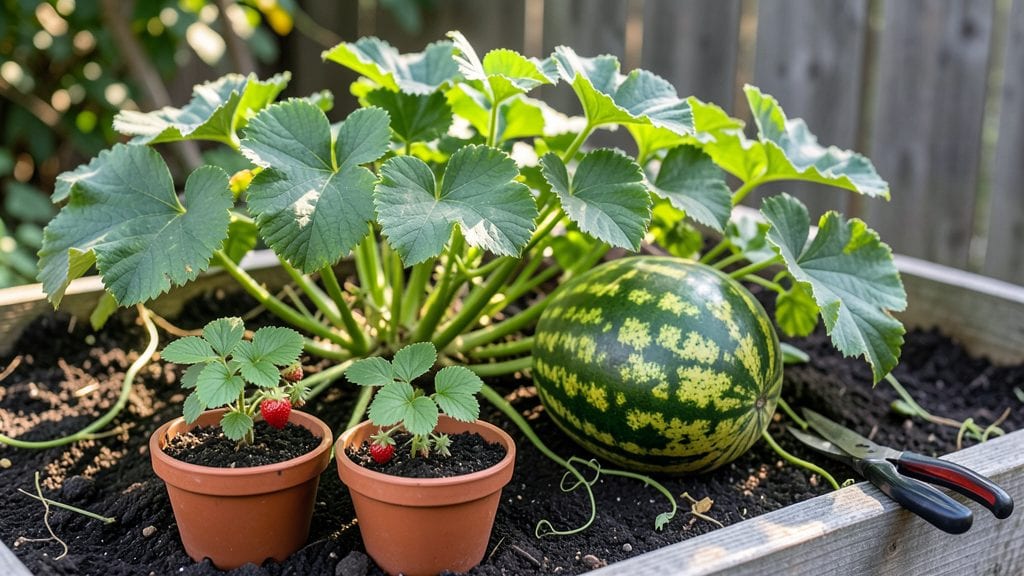
You can plant watermelon and strawberries together in the same garden bed, but their soil needs and growth habits create challenges. Strawberries prefer slightly acidic, well-draining soil, while watermelons thrive in nutrient-rich, moist conditions with full sun exposure. Separating them into distinct zones or using staggered planting rows helps prevent resource competition.
Growing these two crops side by side works best when you account for their opposing needs. Strawberries need acidic soil (pH 5.5-6.5) and shaded spots during peak heat, while watermelons demand neutral-to-slightly alkaline soil (pH 6.0-7.0) and full sun (6+ hours daily). 🌱 The solution?
Plant strawberries in raised beds with peat moss or composted pine needles, while reserving the main garden bed for watermelons. This way, you avoid soil pH conflicts while maximizing space.
Another key factor is spacing. Watermelon vines spread aggressively, needing 3-6 feet between plants, while strawberries thrive in 12-18 inch spacing. If you must combine them, use vertical trellises for strawberries to lift them out of the watermelon vines' shadow.
Just be warned: watermelons will outcompete strawberries for water and nutrients if not managed carefully.
💡 In This Article
- Soil and Nutrient Requirements for Watermelon vs Strawberry Growth
- Best Companion Planting Strategies for Watermelon and Strawberries
Soil and nutrient requirements for watermelon vs strawberry growth
The soil chemistry for these two crops couldn't be more different. Strawberries demand acidic conditions (pH 5.5-6.5), which helps them absorb iron and manganese efficiently—critical nutrients for their vibrant red pigments and sweet flavor development.
Meanwhile, watermelons prefer neutral to slightly alkaline soil (pH 6.0-7.0), where calcium and magnesium become more available to support their rapid vine growth and heavy fruit production. 🌱 The pH scale isn't just numbers—it's a chemical lock: strawberries' root hairs struggle below pH 5.0, while watermelons show stunted growth above pH 7.5.
Nutrient needs also create a stark contrast. Strawberries are light feeders that prioritize potassium for disease resistance and phosphorus for root development, while watermelons are heavy nitrogen consumers that need 0.5-1.0 lbs of nitrogen per 100 sq ft during their 90-day growth cycle.
Here's the catch: too much nitrogen for strawberries causes leafy growth at the expense of fruit, while watermelons deprived of nitrogen produce small, bitter fruit. The solution?
Amend the soil with aged compost (2-3 inches) and peat moss for strawberries, while watermelons benefit from well-rotted manure mixed into the top 12 inches of soil.
Water management becomes another battleground. Strawberries need consistent moisture but hate soggy roots, while watermelons thrive in 1-2 inches of water weekly once established.
The trick is creating micro-zones: use raised beds with perforated drainage pipes for strawberries, while keeping watermelons in ground-level plots where their sprawling vines can access deeper moisture.
Mulching makes all the difference—straw mulch (2-3 inches) keeps strawberry beds cool and retains moisture, while black plastic mulch warms watermelon soil to accelerate germination and fruit ripening.
What most gardeners overlook is the organic matter content. Strawberries prefer 3-5% organic matter by volume, while watermelons need 5-7% to support their massive biomass.
Here's how to balance it: plant strawberries in container gardens or raised beds filled with 50% composted pine bark and 50% coconut coir, then dedicate the main garden to watermelons with composted cow manure mixed into the soil. This creates two distinct growing environments while keeping them physically separate.
Seasonal timing adds another layer. Strawberries produce best in cool spring and fall temperatures (60-75°F), while watermelons need warm soil (70°F+) to germinate. The workaround? Plant June-bearing strawberries in early spring and watermelons in late May, giving the melons time to establish before the strawberries finish fruiting.
This staggered approach prevents both crops from competing for the same nutrients during their peak growth periods.
Pro tip: Test your soil before planting. A simple $20 home test kit reveals pH and nutrient levels—critical data for adjusting amendments. For shared borders, create a 3-foot buffer zone between crops using living mulches like clover, which suppresses weeds while allowing light to reach both plants.
This hybrid approach lets you grow both without sacrificing yield or health. 💫