Plants
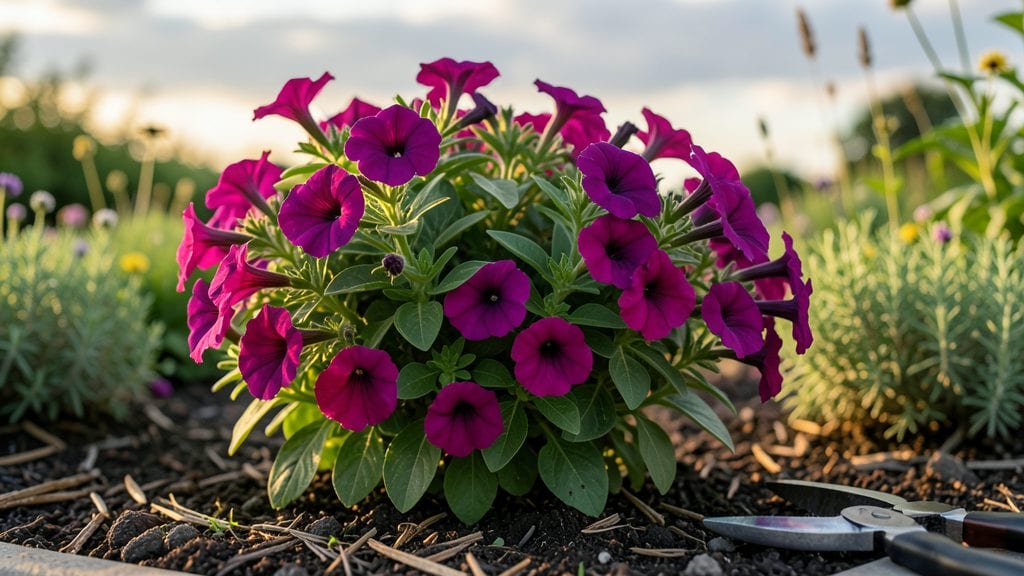
Petunias are full sun plants that need at least 6-8 hours of direct sunlight daily for peak blooms and rich color, though some varieties handle partial shade in hotter regions. Too much harsh afternoon sun can scorch leaves, so afternoon shade may help in extreme heat.
Petunias love bright light because it triggers their photosynthesis engines—more sun means more energy for those showstopping flowers. 🌞 The key is balancing intensity: while they crave sunlight, varieties like 'Wave' petunias can handle afternoon shade in Zone 9+ climates.
I've seen gardeners extend bloom seasons by providing dappled shade during peak heat, especially for trailing types that sprawl and need protection from drying winds. Morning sun is gentler, while afternoon rays can turn leaves crispy if conditions are too harsh.
For container growers, rotating pots every few days ensures even light exposure, while mulching keeps roots cool. Bush varieties often handle full sun better than trailing ones, which may need afternoon relief. The trade-off? Less sun means fewer blooms, but better leaf health in scorching zones.
💡 In This Article
- Petunia Sunlight Requirements Explained
- Adjusting Petunia Care for Sunlight Variations
Petunia sunlight requirements explained
Petunias harness sunlight through photosynthesis, converting light energy into glucose that fuels their spectacular blooms. Their ideal light spectrum peaks at 400-700 nanometers (visible blue to red light), where chlorophyll absorbs most efficiently.
This energy production directly correlates with flower count—studies show petunias in full sun produce 30-50% more blooms than those in partial shade, thanks to increased sugar production in leaves.
The vibrant pigments in petunia petals (like anthocyanins) actually deepen under proper light exposure, creating those rich purples and magentas we love.
Morning sunlight provides gentler, cooler light with lower UV intensity, perfect for kickstarting photosynthesis without stressing delicate leaves. Afternoon sun, however, delivers higher UVB levels (up to 3-5 times stronger at midday) that can cause photoxidative damage—visible as brown leaf tips or crispy edges.
This is why heat-sensitive varieties like 'Supertunia' often need afternoon shade in Zone 8+ climates. The trade-off becomes clear when comparing growth: full sun petunias develop sturdier stems but may bloom less prolifically in extreme heat without protection.
Here's how to assess sunlight intensity in your garden: Use the "hand test"—hold your hand out for 10 minutes at noon. If it feels warm but not scorching, that's ideal full sun.
For partial shade, look for areas with dappled light (like under 30% tree canopy) where temperatures stay 85°F. Many gardeners use light meters (around $20) to measure 10,000-15,000 lux for optimal petunia growth.
In containers, rotate pots weekly to ensure even light distribution, as trailing varieties can develop "sunburned" sides otherwise.
UV exposure plays a fascinating role in petunia pigmentation. The blue light spectrum (400-500nm) enhances purple hues by stimulating anthocyanin production, while red light (600-700nm) boosts overall growth. This is why petunias in full sun often display brighter colors than shade-grown counterparts.
However, too much UV can bleach pigments—notice how some white petunias develop yellowing under intense afternoon sun. The solution? Provide 30-50% shade cloth during peak hours (11AM-3PM) in hot climates to maintain that perfect color balance.
Container-grown petunias face unique challenges due to their limited root zones. Without proper sunlight, they'll become leggy and sparse, while excessive heat causes flower drop. Bush varieties like 'Mitchell' handle full sun better than trailing types, which need afternoon relief.
For extreme heat zones, try the "shade sail technique"—position a lightweight fabric (like 50% shade cloth) to filter harsh rays while allowing beneficial light through. This maintains blooming while preventing wilting.
What most gardeners don't realize is that petunias actually close their flowers on cloudy days—a survival mechanism to conserve energy. This temporary dormancy disappears when sunlight returns, proving how critical light is to their daily rhythms.
For maximum impact, pair your petunias with complementary plants like salvias (which tolerate drier conditions) to create a balanced microclimate that regulates temperature and humidity around your flowers.